How to Build a Pollinator Garden That Feeds the Bees
A pollinator garden is any patch of ground planted to feed and shelter bees and the other pollinators we lean on, whether that's a real garden bed or three pots crowded onto a balcony. The ingredients are simple: native flowers, something in bloom in every season, a little water, and no pesticides. You don't need land or any particular talent for this. You just need to start.
And it's worth starting. Most of us were raised to think of bees as background, but close to a third of what ends up on our plates depends on pollinators, and they're having a hard time of it lately between vanishing habitat and the chemicals we spray around. A garden won't fix all of that. It is, though, one of the few things you can do from your own backyard that actually helps, it costs almost nothing, and pays you back in a whole season of color and noise.
Start with native plants
Native flowers are the foundation of any pollinator garden, because the bees in your area evolved alongside them and recognize them instantly as food. Many native bees are specialists, tied to particular plants, and an exotic ornamental from a garden center may offer them nothing at all. Native plants tend to be the more forgiving choice for you, too. Having adapted to local soil and rainfall over thousands of years, they usually ask for less water, less feeding, and no coddling once they are established. In the Pacific Northwest that might mean Oregon grape, red flowering currant, camas, lupine, yarrow, Douglas aster, goldenrod, or self-heal, but every region has its own list. Your local native plant society or extension office can tell you what belongs where you live, and starting there will save you money and disappointment.
Plant for bloom across the seasons
The goal is continuous forage, which means choosing a mix that flowers from the first warm days of spring through the last of fall. Bees need food most at the edges of the season, not only at the height of summer. In early spring, bees emerge hungry and the earliest blooms can decide whether a colony thrives; in autumn, bees are stocking up for the long, lean winter ahead. A garden that is glorious in July but bare in April or September leaves them stranded at exactly the moments they are most vulnerable. Aim for a patchwork: early bloomers like willow, crocus, and flowering currant; midsummer favorites like borage, lavender, bee balm, and coneflower; and late performers like aster, goldenrod, and sedum to carry them toward the cold. If you remember only one thing, plant for the shoulder seasons.
Favor single, open blooms
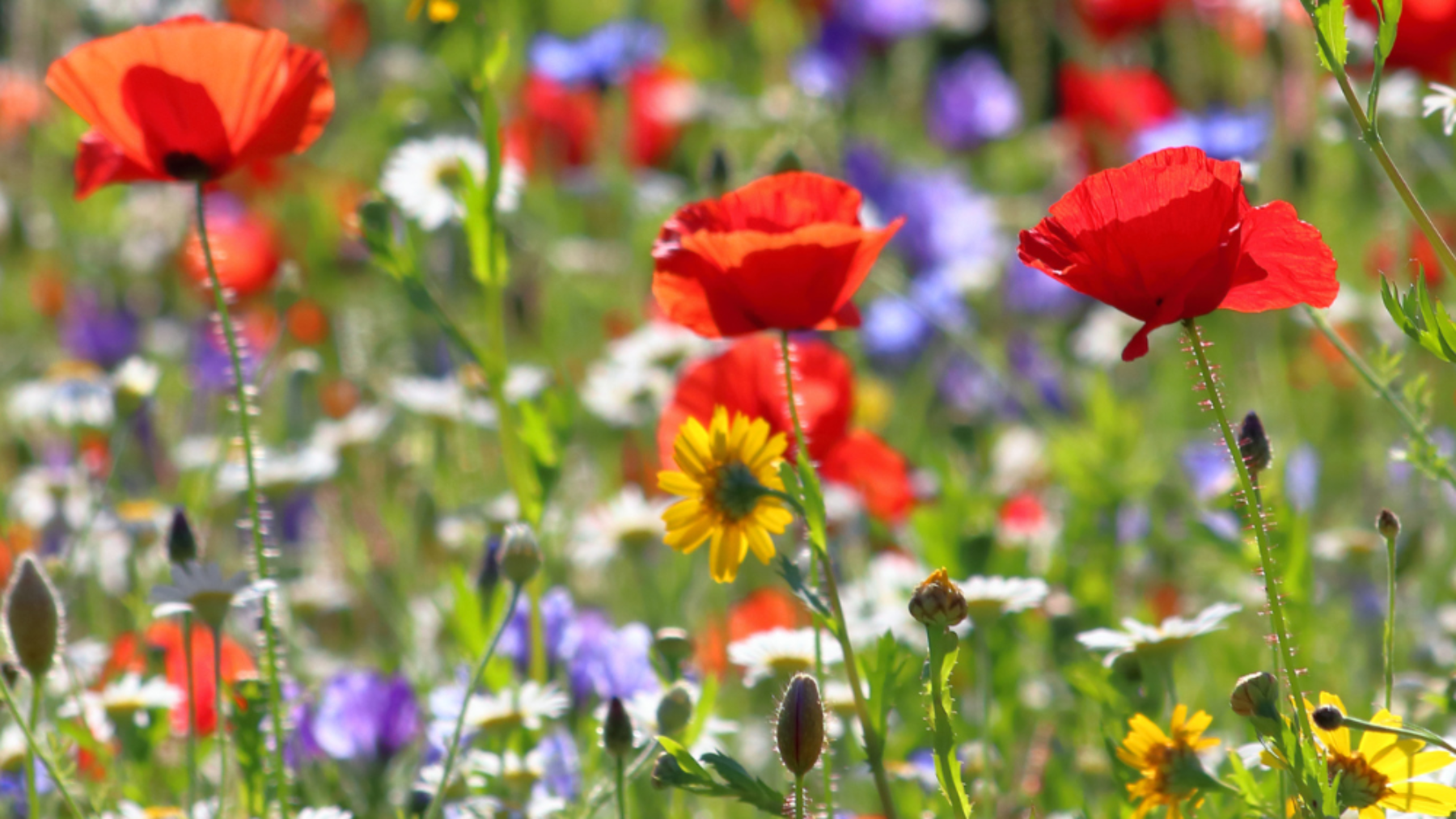
When you choose flowers, favor simple, single, open shapes over the showy double blooms bred for the cut-flower trade. Those ruffled, many-petaled varieties often look spectacular and give bees almost nothing, because the extra petals are bred in at the expense of the pollen and nectar a bee actually came for, and the dense centers can be physically impossible to reach. A good rule of thumb: if you can easily see the center of a flower, so can a bee. Daisy-shaped blooms, open cups, and flat clusters of tiny flowers like those on yarrow or oregano give pollinators an easy landing pad and an honest meal. This is part of why old-fashioned wildflowers are such a natural fit. They were never bred away from their original purpose.
Skip the pesticides
This is the one non-negotiable rule of a pollinator garden. Pesticides, including many sold as garden-safe, can harm or kill the very pollinators you are working to invite, and some of the most common ones are systemic, meaning the plant draws the chemical up into its own pollen and nectar where bees feed. It is worth asking your nursery whether their plants have been pre-treated, since a flower that looks like a feast can quietly be the opposite. A pollinator garden and a spray bottle simply do not belong together. The good news is that a healthy, diverse garden tends to balance itself: beneficial insects arrive to keep pests in check, and a few chewed leaves do no real harm. Let some imperfection be. A slightly wild garden is usually a healthy one, and learning to tolerate a little mess is part of the practice.
Add water and shelter
Bees get thirsty, and a shallow dish filled with pebbles or marbles gives them somewhere safe to land and drink without the risk of drowning; refresh it every few days so it stays clean. Shelter matters just as much as food, and it is the part most gardens forget. The majority of native bees are solitary, nesting in the ground or in hollow plant stems rather than in hives, so leaving a patch of bare, undisturbed soil, a few standing stems through winter, or a quiet wild corner gives them somewhere to raise the next generation. Resisting the urge to tidy away every leaf and stalk in fall is one of the kindest things you can do for them. If you want to go further, a small brush pile or a simple bee house adds even more room, though a little benign neglect accomplishes most of it on its own.
The reward
The reward arrives faster than you expect. Within a single season, a quiet patch of ground becomes a living, humming thing, busy with bees and butterflies and the small ordinary miracle of flowers doing exactly what they were made to do. There is a particular kind of calm in tending it, in slowing down enough to notice which blooms opened this week and who came to visit them. If you have children, it is a gentle, hands-on way to show them where food and flowers truly begin. And if you are anything like us, you come away with a deeper appreciation for the bees behind so much of what we eat and make, and for the patient, unhurried work of the hive. A pollinator garden gives back far more than it asks.
Discover the botanicals we grow and wildcraft. ✧
Frequently asked questions
How do I start a pollinator garden? Begin with native flowers, plant for blooms across the seasons, choose simple open-petaled varieties, skip the pesticides, and add a shallow water source and some undisturbed shelter. Even a few pots are enough to begin.
What flowers are best for bees? Native, single-petaled, open flowers that bloom at different times of year, so there is always something in season. Wildflowers, herbs left to flower, and regional natives are all reliable choices.
Can I have a pollinator garden in pots? Yes. Even a few pots of native flowers on a balcony or doorstep provide real forage, and a cluster of containers can support a surprising amount of life.
When is the best time to plant one? Spring and fall are both good planting windows in most regions, giving roots time to settle before the heat of summer or the cold of winter. The most important thing is simply to start.
Will a pollinator garden mean more stings? Not really. Bees foraging on flowers are focused on the blooms, not on you, and most sting only when they feel threatened. A pollinator garden

Written by Jillian Medford