The Benefits of Honey for Skin: Why Bees Make the Best Skincare
Honey for skin is a natural humectant; it pulls moisture into the upper layers of the skin and holds it there, and raw honey is also gently antibacterial and dense with antioxidants that support the skin barrier. That quiet capability is why people have reached for honey long after every newer trend faded, and it's the reason honey sits at the center of nearly everything we make.
Long before serums and acids, before anything was formulated in a lab, people reached for what the hive already made. We still do, not out of nostalgia, but because raw honey is one of the most capable ingredients you can put on your face.
What raw honey does for your skin
Honey is a humectant, which means it draws moisture into the upper layers of the skin and holds it there. That's the soft, settled feeling you notice after a honey mask. It's also naturally antibacterial: its low water activity and trace hydrogen peroxide make it inhospitable to the microbes that aggravate breakouts. And it's dense with enzymes and antioxidants that support the skin barrier rather than stripping it.
The texture is part of the medicine. Raw honey is thick and golden, almost slow. Warmed between your fingers it loosens into something that glides, and on skin it settles into a soft veil that rinses away to leave skin calm rather than tight.
Why raw honey is the only kind worth using
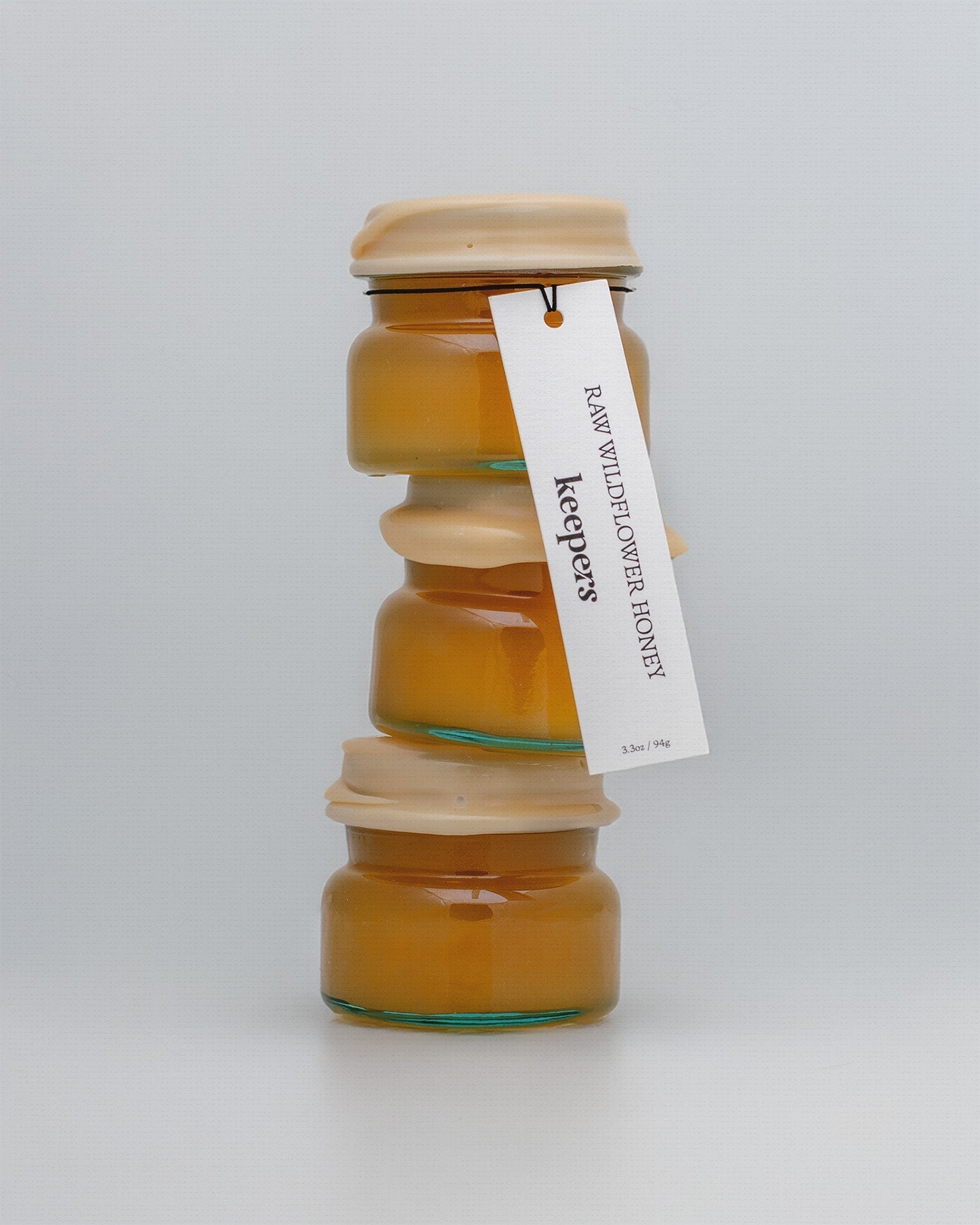
Most grocery-shelf honey has been heated and ultra-filtered until the enzymes, pollen, and traces of propolis, the parts that make it bioactive, are gone. What's left is sweetener. Raw, unheated honey keeps its intelligence intact, and that's the only kind we'll work with. Ours comes from our own hives in the Snoqualmie Valley, harvested in small batches and never pasteurized. It's the same honey we jar as our Raw Wildflower Honey, so the honey you might drizzle over breakfast is the very same one you can smooth onto your skin.
Honey for different skin types and concerns
One of the reasons honey has lasted is that it meets different skin where it is.
For dry skin, honey is a quiet workhorse. As a humectant it pulls water into the surface, and when you seal it with an oil or balm afterward, that moisture stays put instead of evaporating. A few drops of a face oil like our Wild Devotion pressed over still-damp skin does exactly that, and dry, tight skin tends to drink it in.
For oily and breakout-prone skin, the appeal is different. Honey's natural antibacterial quality makes it inhospitable to the microbes that aggravate blemishes, and because it hydrates without heaviness, it doesn't leave the slick film that sends oily skin into overdrive. Many people find a weekly honey mask calms things down rather than stirring them up.
For sensitive or reactive skin, honey is about as gentle as a beauty ingredient gets. There's nothing to brace against, no acid sting, no tingle meant to prove it's working. Paired with propolis, which quiets inflammation, it tends to soothe skin that harsher products have let down. If you'd like that gentleness in something you can reach for daily, that's exactly what we built our Sacred Nectar serum to do.
For mature skin, the antioxidants matter most. They help skin defend itself against the daily oxidative wear that ages it, while the humectant pull keeps the surface plump and soft.
Three simple honey skincare rituals
The simplest ritual is the most effective: a thin layer of raw honey on clean, damp skin, left for ten quiet minutes, then rinsed with warm water. Once or twice a week is plenty, and our Raw Wildflower Honey is all you need for it.
As a spot treatment, a dab of raw honey left on a blemish for fifteen minutes lets its antibacterial quality work where you need it, without drying out the skin around it.
As a gentle cleanse, warmed honey massaged into damp skin and rinsed lifts the day without stripping: a soft option for mornings when your skin feels delicate. If you'd like that same honey cleanse without working straight from the jar, it's exactly what our Royal Ritual cleanser was made for.
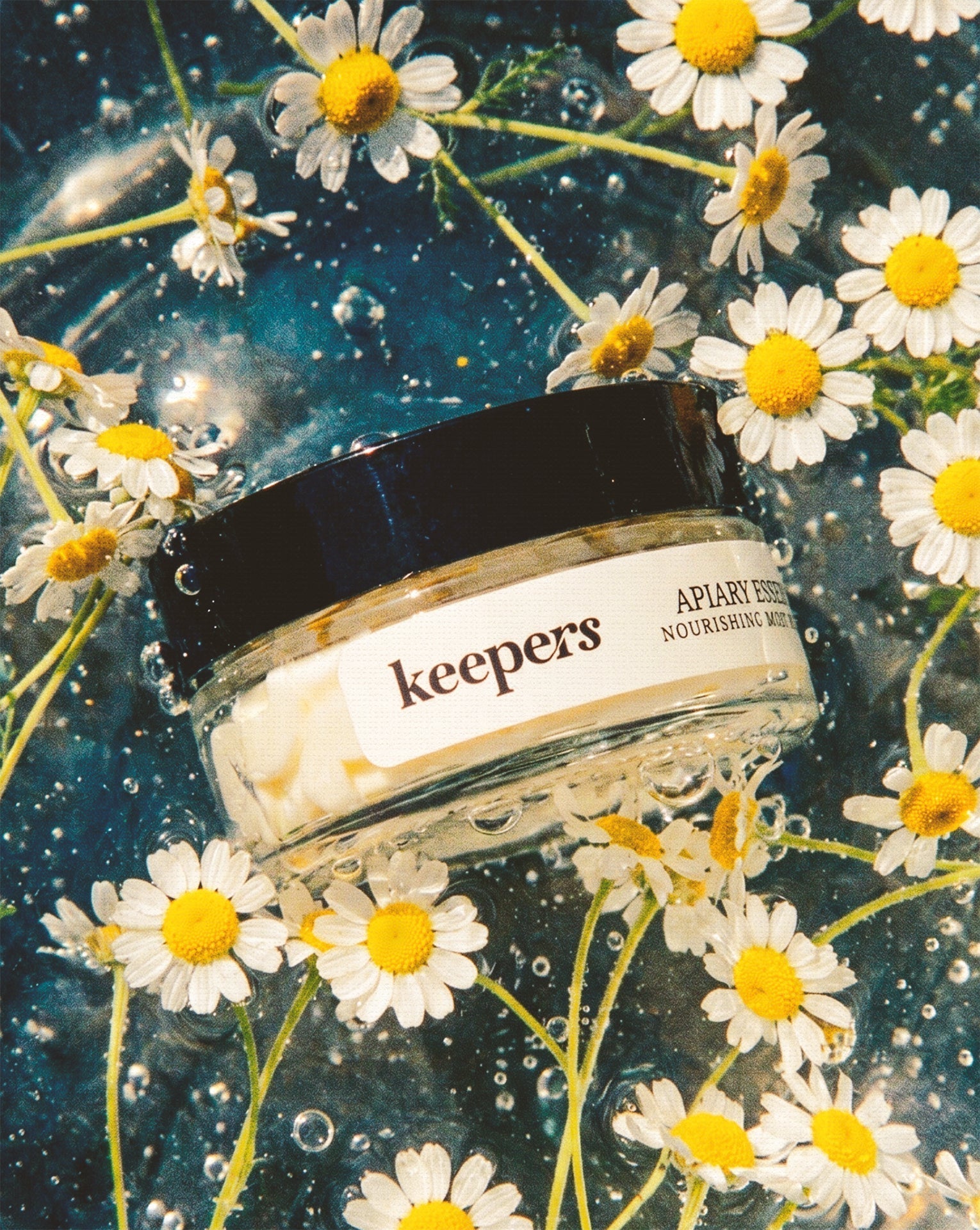
And if you'd rather have honey working quietly in the background every day, that's the whole idea behind our skincare. Honey is the foundation of nearly everything we make, layered with the other gifts of the hive and botanical oils so its full character shows up together: a honey cleanser to begin, a honey serum to hydrate, and a bee propolis nourishing oil to seal it all in.
Is honey safe for your skin?
For most people, yes. The two things worth knowing: if you have a known bee or pollen allergy, patch test on your inner arm first and wait a day, and avoid applying honey to broken or open skin without guidance. Beyond that, raw honey is one of the lower-risk ingredients you can use, which, given how much it does, is part of what makes it remarkable.
The bees spent millions of years perfecting this. Our job is to stay careful enough not to undo it.
Frequently asked questions
Is raw honey good for your face? Yes. Raw honey is a humectant that hydrates, and its natural antibacterial properties suit calm, balanced skin. Apply to clean, damp skin and rinse after about ten minutes.
Does honey help with acne? Honey's low water activity and trace hydrogen peroxide make it inhospitable to acne-causing bacteria, so many people find a weekly honey mask or a dab on a blemish helps calm breakouts.
How often should you use a honey mask? Once or twice a week is plenty for most skin.
Where should I start with honey skincare? To try honey the simplest way, our Raw Wildflower Honey doubles as a weekly mask. For a daily routine, many people begin with the Royal Ritual cleanser and Sacred Nectar serum, then seal with a Wild Devotion facial oil.

Written by Jillian Medford