What ‘Clean Beauty’ Really Means (and How to Spot Greenwashing)
Clean beauty has been stretched so far it barely means anything: everyone claims it, and almost no one defines it. So what does clean beauty really mean? The useful definition comes down to three honest questions about any product: what is actually in it, where it comes from, and whether it respects your skin. Set the marketing aside, and those three questions tell you almost everything.
What's actually in your products?
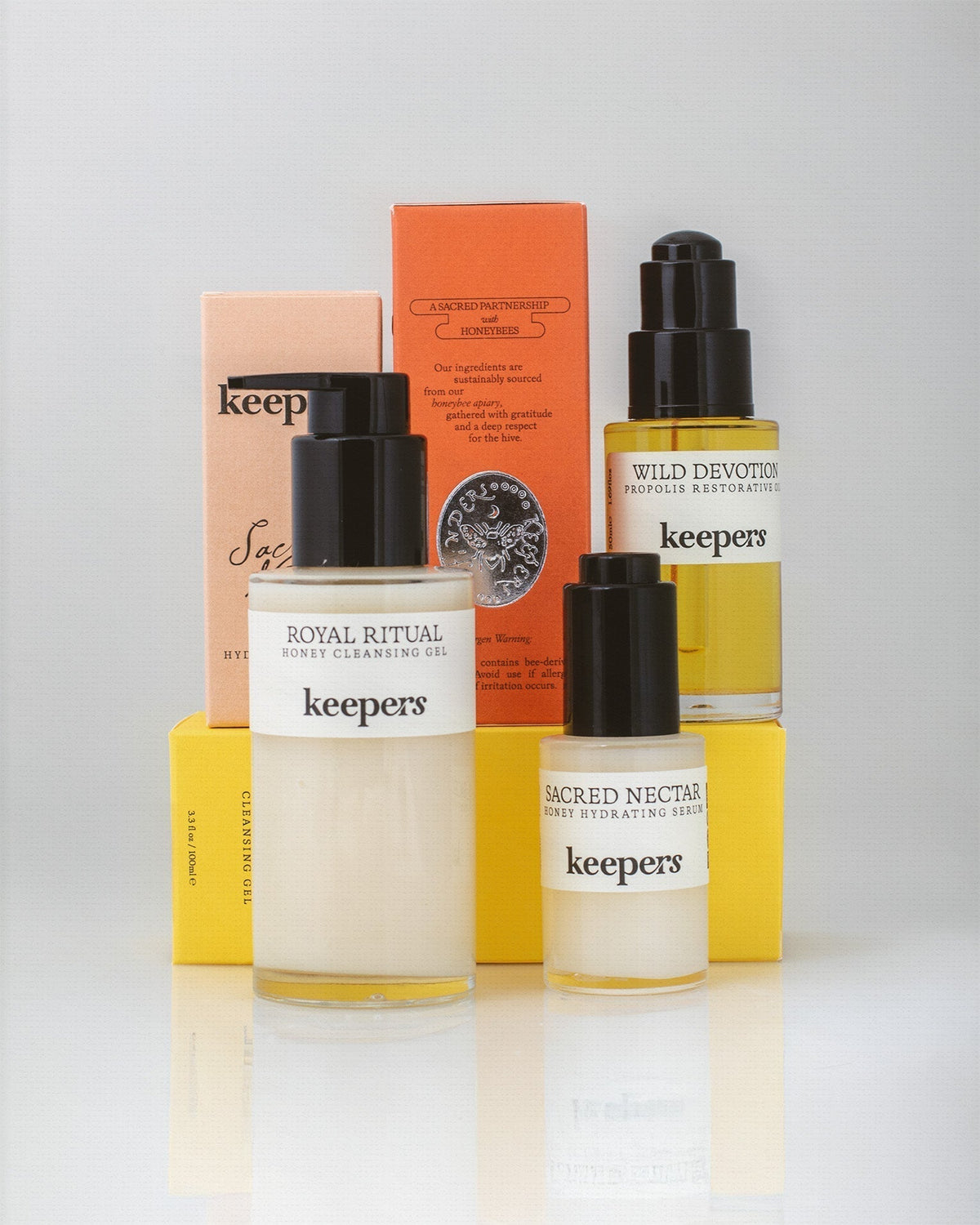
A short, legible ingredient list is worth more than a long one full of words you cannot place. We would rather use raw honey, propolis, beeswax, royal jelly, and a few wildcrafted botanicals, each one there for a reason, than pad a formula to look impressive. If you cannot tell why an ingredient is in the jar, that is worth noticing.
Where does it come from?
Provenance is the part the label rarely tells you. Our bee ingredients come from our own apiary in the Snoqualmie Valley, harvested in small batches and formulated by hand. That traceability is the difference between a story borrowed from nature and something actually rooted in it.
Does it respect your skin?
A formulation earns its keep by what it leaves out, no needless fillers, no harsh actives your barrier has to recover from, and by what it does. Skin that runs sensitive or reactive does not need intensity. It needs ingredients with intelligence, used in their most vital form.
How to read a clean beauty label
The front of a package is marketing; the back is the truth. Ingredients are listed in order of concentration, so the first five tell you what a product mostly is. If the actives you were sold on appear near the very end, they are more story than substance. Look for a short list of recognizable names. And treat unregulated front-of-pack words, natural, clean, non-toxic, chemical-free, as claims to verify, not facts. Everything is a chemical; water is a chemical. What matters is what the specific ingredients are and where they came from.
Spotting greenwashing
Greenwashing is when the packaging works harder than the formula. The tells are consistent: earthy colors and leaf imagery wrapped around an ingredient list that tells a different story; a single hero botanical featured on the front while the bulk of the formula is filler; vague certifications or seals that do not link back to any standard. The honest signal is the boring one: a brand willing to tell you exactly what is inside and where it was made.
Ingredients we choose to leave out, and why
We are not in the business of fear, and a long avoid-this list usually is. But there are a few things we leave out on purpose. We skip synthetic fragrance, because it is a common trigger for reactive skin and fragrance can hide a long undisclosed list. We skip harsh sulfate detergents in our cleanser, because they strip the barrier in the name of feeling clean. And we skip fillers added only to stretch a formula, because every ingredient should earn its place. None of this is about declaring other ingredients dangerous; it is about keeping our own list short, honest, and useful.
Is clean beauty actually better?
Honestly, clean by itself guarantees nothing, because no one agrees on what it means and no regulator enforces it. A poorly made natural product can irritate skin just as a well-made conventional one can perform beautifully. The value is not in the word, it is in the practice behind it: short formulas, traceable sourcing, and a brand willing to show its work. Judge a clean beauty product the way you would judge any other, by what is actually in it, where it came from, and how your skin responds over a few weeks.
Small-batch vs. mass-market clean beauty
Not all clean beauty is made the same way, and the difference often comes down to scale. A mass-market clean line still has to survive months on a shelf and travel through a long supply chain, which usually means more preservatives, more standardization, and ingredients sourced wherever is cheapest that quarter. Small-batch making trades shelf life and volume for freshness and traceability: formulas made in small runs, by hand, from ingredients the maker can actually point to. Neither is automatically virtuous, but if provenance and a short formula matter to you, small-batch is structurally better placed to deliver them.
Putting it into practice
Once you can read a label and spot the marketing, building a routine is the easy part: fewer, better things you can trace to the source. If you want the steps, our simple three-step natural skincare routine and our guide to the right order to apply skincare both build on exactly these principles.
Explore our short, traceable ingredient lists and see clean beauty defined, not just claimed. ✧
Frequently asked questions
What does clean beauty actually mean? There is no single legal definition, so the useful test is a short, traceable ingredient list, known provenance, and formulas that leave out needless fillers and harsh actives.
How do I know if a product is really clean? Read the back of the label, not the front: check the first five ingredients, look for recognizable names, and favor brands that tell you where their ingredients come from.
How can you spot greenwashing? Watch for earthy packaging and a single hero botanical wrapped around a filler-heavy formula, plus vague seals that do not link to a real standard.
Is clean beauty better for sensitive skin? Often, because the approach favors fewer, gentler ingredients and skips synthetic fragrance, but clean alone is not a guarantee; the specific formula still matters.
Is natural always safer? No. Poison ivy is natural, and plenty of botanicals irritate sensitive skin. Judge the specific formula, not the adjective.

Written by Jillian Medford